


Watching your parents grow older can bring difficult decisions. They may still enjoy their routines and independence, but changes in mobility, memory, personal hygiene, or health can make you wonder whether additional support is necessary.
When an aging parent needs home care, the warning signs aren’t always obvious. A missed medication, unexplained bruise, or neglected household task might seem minor. When these changes become frequent, however, they deserve attention.
Recognizing potential problems early helps families explore appropriate care while respecting their loved one’s independence.
According to the National Institute on Aging, changes in everyday functioning can indicate that an older adult may need additional assistance.
Here are seven warning signs Texas families should recognize, along with guidance on choosing the right type of support.
7 Warning Signs Your Aging Parent Needs Home Care
1. Frequent Falls, Poor Balance, or Difficulty Walking
Falls and mobility problems are important warning signs, particularly when an older adult lives alone.
Look for:
- Repeated falls or unexplained bruises
- Difficulty standing, walking, or climbing stairs
- Holding onto furniture for balance
- Fear of falling while bathing or moving around the home
Falls shouldn’t be dismissed as a normal consequence of aging. The CDC’s fall prevention guidance recommends discussing fall risks with a healthcare professional and addressing hazards such as poor lighting and loose rugs.
What to do: Arrange a medical evaluation for recurring falls or changes in mobility. Depending on the cause, physical therapy, home safety modifications, or personal assistance may help.
If an aging parent needs home care because walking or bathing has become unsafe, a professional assessment can help identify the appropriate services.
2. Difficulty Managing Medications
Managing several prescriptions can become challenging, especially when medications have different schedules or instructions.
Warning signs include:
- Missed or duplicated doses
- Confusion about medication instructions
- Expired or unexpectedly full prescription bottles
- Difficulty opening containers or reading labels
- New symptoms after medication changes
Medication mistakes may create serious health risks.
What to do: Ask a pharmacist or prescribing clinician to review the medication list. For eligible patients, skilled home health nursing may provide medication-related assessment, education, or monitoring under an authorized care plan.
Personal attendants should not be assumed to provide licensed nursing services.
When an aging parent needs home care because of medication difficulties, determining whether the issue requires medical care, practical assistance, or both is essential.
3. Difficulty Bathing, Dressing, or Maintaining Personal Hygiene
Personal care is often one of the first areas where an older adult begins needing help.
Common signs include:
- Avoiding showers or bathing
- Wearing the same clothes repeatedly
- Difficulty dressing or grooming
- Trouble getting in or out of the bathtub
- Problems using the bathroom independently
These tasks are known as activities of daily living (ADLs).
What to do: Talk with your parent respectfully about which activities feel difficult. An occupational therapy assessment may help identify safety concerns, while authorized personal assistance may support bathing, dressing, and grooming.
Sometimes an aging parent needs home care primarily to complete everyday activities safely while maintaining dignity and independence.
4. Difficulty Managing Chronic Health Conditions
Diabetes, heart disease, and other chronic conditions don’t automatically mean someone needs home health care. However, changes in symptoms or difficulty following treatment instructions may indicate a need for evaluation.
Watch for:
- Increasing weakness or fatigue
- Difficulty following prescribed treatment
- Problems monitoring a condition as instructed
- New swelling, breathing difficulties, or worsening symptoms
- Repeated urgent care visits or hospitalizations
What to do: Contact your parent’s healthcare professional about new or worsening symptoms.
Depending on medical necessity, eligibility, and provider orders, skilled home health care may include nursing assessment, monitoring, patient education, or rehabilitation.
When an aging parent needs home care for a chronic condition, the level of support should match their individual clinical and functional needs.
5. Slow Recovery After Surgery, Illness, or Hospitalization
Returning home after hospitalization doesn’t always mean recovery is complete.
Some older adults experience weakness, reduced mobility, wound care needs, or difficulty following discharge instructions.
Possible warning signs include:
- Difficulty walking or transferring safely
- Concerns about wound healing
- Trouble following discharge instructions
- Increasing weakness after hospitalization
- Difficulty completing everyday activities
What to do: Review discharge instructions and ask the healthcare team whether a home health assessment is appropriate.
Eligible patients may receive ordered skilled nursing, wound care, physical therapy, occupational therapy, or speech-language pathology.
An aging parent needs home care after hospitalization when additional support is necessary for recovery or daily functioning, although skilled services have separate eligibility requirements.
6. Noticeable Changes in Memory, Thinking, or Judgment
Occasional forgetfulness can occur with aging, but persistent or worsening cognitive changes deserve medical attention.
Look for:
- Getting lost in familiar places
- Repeatedly forgetting important appointments
- Difficulty managing bills or everyday decisions
- Leaving appliances on or doors unlocked
- Increasing confusion about familiar routines
Memory problems don’t always indicate dementia. Medication effects, infections, sleep problems, and other conditions can affect thinking.
What to do: Document specific changes and discuss them with a healthcare professional. Sudden confusion or neurological symptoms require urgent medical attention.
If an aging parent needs home care because of memory or judgment difficulties, a professional evaluation can help determine appropriate safety measures and support.
7. Changes in Eating Habits, Weight, or Household Safety
Sometimes the strongest warning signs appear in everyday routines rather than medical symptoms.
Pay attention to:
- Unintentional weight loss
- Skipped meals or spoiled food
- Difficulty preparing meals
- Increasing household clutter
- Unpaid bills or neglected essential tasks
- Unsafe use of appliances
Unexplained weight loss may indicate an underlying medical condition and should be evaluated.
What to do: Ask about shopping, meals, appetite, and household responsibilities. Depending on eligibility and authorization, personal assistance may help with certain meal preparation and household tasks.
Recognizing these changes early can help families prevent avoidable safety problems.
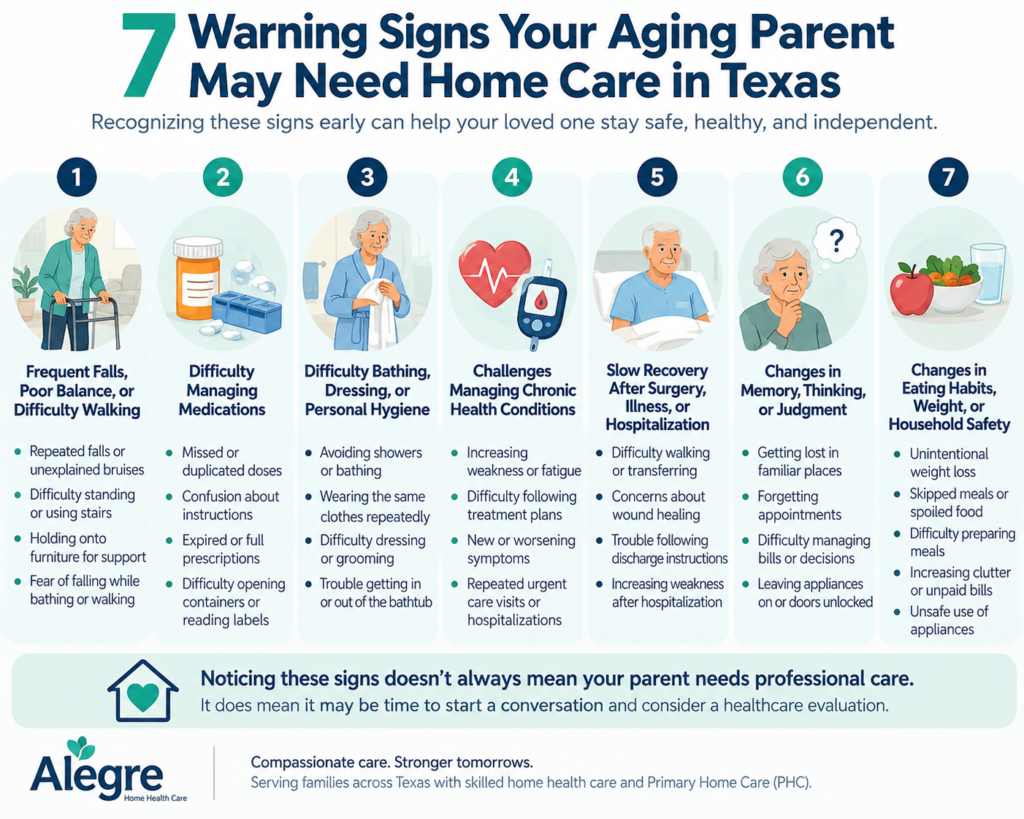
Seven warning signs that an aging parent may need additional support at home. Recognizing changes early can help families make informed care decisions.
Skilled Home Health Care vs. Primary Home Care in Texas
When an aging parent needs home care, understanding the difference between medical services and personal assistance is important.
Texas families commonly encounter two different service categories:
| Skilled Home Health Care | Primary Home Care (PHC) | |
|---|---|---|
| Purpose | Medical treatment and rehabilitation at home | Assistance with authorized everyday activities |
| Examples | Skilled nursing, wound care, physical therapy, occupational therapy, speech therapy | Bathing, dressing, grooming, meal preparation, certain household tasks |
| Providers | Qualified nurses and therapy professionals | Attendants performing authorized nontechnical tasks |
| Eligibility | Medical necessity, orders, and applicable payer requirements | Texas program eligibility, assessment, and authorization |
| Medicare | May be covered when Medicare requirements are met | Separate from Medicare skilled home health coverage |
Skilled Home Health Care
Skilled home health care provides medically necessary services through qualified healthcare professionals.
For Medicare-covered services, patients generally must meet requirements involving qualifying skilled-care needs, homebound status, appropriate provider orders, and a Medicare-certified home health agency.
Texas Primary Home Care (PHC)
Primary Home Care supports eligible individuals who need authorized assistance with daily activities because of functional limitations.
Services may include personal hygiene, dressing, meal preparation, and certain household tasks.
PHC eligibility, approved tasks, and service hours depend on Texas program rules and individual assessments.
Read the official Texas HHSC Primary Home Care and Community Attendant Services guidance.
Important: Texas Primary Home Care is not skilled nursing and should not be confused with the separately named Texas Primary Health Care program.
Families can also explore Alegre’s home health care services to understand available options.
When Should You Contact a Healthcare Professional?
Schedule an evaluation when your parent experiences repeated falls, medication mistakes, unexplained weight loss, worsening symptoms, persistent confusion, or increasing difficulty with daily activities.
Describe specific changes and when they began. A healthcare professional can help identify medical causes and recommend appropriate care.
When Is It an Emergency?
Call 911 immediately for chest pain, severe breathing difficulty, sudden weakness on one side, difficulty speaking, a major change in consciousness, or other symptoms of a medical emergency.
Serious injuries and sudden confusion also require prompt medical attention.
Home care is not a substitute for emergency treatment.
Does Medicare Cover Home Health Care for Seniors in Texas?
Medicare may cover qualifying home health services when specific requirements are met.
These generally include:
- A qualifying need for intermittent skilled nursing or certain therapy services
- Meeting Medicare’s homebound criteria
- Evaluation and orders from an authorized healthcare provider
- Care through a Medicare-certified home health agency
Medicare generally doesn’t cover 24-hour home care, meal delivery, or personal care when it is the only service needed.
Coverage depends on the patient’s circumstances and applicable Medicare requirements.
Review Medicare’s official home health coverage information for details.
Texas PHC is a separate program with different eligibility and authorization requirements.
Alegre Home Health Care Services Across Texas
Alegre Home Health Care helps Texas families explore appropriate services based on individual needs, eligibility, and location.
Services differ by office, so it’s important to confirm availability before arranging care.
Mission, Texas
Services: Skilled home health care and Primary Home Care (PHC).
Address: 1904 East Griffin Parkway, Mission, TX 78572.
Learn more about home care services in Mission, Texas.
El Paso, Texas
Services: Skilled home health care and Primary Home Care (PHC).
Address: 4115 Trowbridge Drive, El Paso, TX 79903.
Explore home health care services in El Paso.
San Antonio, Texas
Services: Primary Home Care (PHC) only.
Address: 4242 East Piedras Drive, Suite 102, San Antonio, TX 78228.
Learn about home care in San Antonio, Texas.
Eagle Pass, Texas
Services: Primary Home Care (PHC) only.
Address: 2149 Del Río Boulevard, Suite 301, Eagle Pass, TX 78852.
Additional Service Areas
Alegre also serves eligible individuals through PHC-related services in:
- Corpus Christi
- Austin
- Presidio
These are service areas, not additional physical offices. Contact Alegre to confirm current coverage and service availability.
How to Get Started With Alegre Home Health Care
If you’re concerned that your aging parent needs home care, consider these steps:
- Talk with your parent. Ask which daily activities have become difficult and what support they would feel comfortable receiving.
- Consult a healthcare professional. Discuss medical symptoms, falls, medication concerns, and functional changes.
- Identify the type of care needed. Determine whether skilled medical care, rehabilitation, personal assistance, or other support may be appropriate.
- Contact Alegre Home Health Care. Discuss available services, eligibility, and the next steps.
Call: 844-674-1431
Online: Contact Alegre Home Health Care
Service availability, admission, and authorization depend on individual circumstances.
Frequently Asked Questions
How do I know if my aging parent needs home care?
Look for repeated problems with mobility, medication management, personal hygiene, memory, meals, or household safety. A healthcare assessment can help determine whether professional support is appropriate.
My elderly parents need help but refuse assistance. What should I do?
Start by listening to their concerns. Discuss specific difficulties, respect their preferences, and consider introducing smaller forms of support. Involve a healthcare professional when medical or safety concerns arise.
Is home care the same as home health care?
Not always. Home care often describes assistance with daily activities, while home health care generally involves skilled medical or rehabilitation services. Texas PHC has specific program rules.
Does Medicare cover help with bathing and dressing?
Medicare may cover certain part-time or intermittent home health aide services when the patient also qualifies for specified skilled home health services. It generally doesn’t cover personal care when that is the only service needed.
Can Alegre provide skilled nursing in every service area?
No. Alegre’s skilled home health services are associated with its Mission and El Paso operations. San Antonio, Eagle Pass, Corpus Christi, Austin, and Presidio are designated here for PHC services.
What if my parent only needs help with everyday activities?
Personal assistance may be appropriate. Texas PHC may be an option for eligible individuals who receive authorization for the relevant services. Other community or private-pay arrangements may also be available.
Final Thoughts: Helping Your Aging Parent Stay Safe and Independent
Recognizing that an aging parent needs home care can be emotionally challenging. Families want to protect their loved ones without unnecessarily limiting their independence.
The goal is to recognize meaningful changes, address safety concerns, and choose support based on individual needs.
Whether your parent needs temporary assistance after an illness or ongoing help with everyday activities, starting with a healthcare assessment can make the next steps clearer.
Alegre Home Health Care helps Texas families explore appropriate care options.
Call 844-674-1431 or contact our team to discuss available services.
Medical and Regulatory References
- National Institute on Aging. Does an Older Adult in Your Life Need Help?
- National Institute on Aging. Caregiving Resources
- Centers for Disease Control and Prevention. Preventing Falls
- Medicare.gov. Home Health Services Coverage
- Texas Health and Human Services Commission. Primary Home Care and Community Attendant Services
Educational Content Review: Reviewed for general healthcare educational accuracy by Dr. Sadia Nowrin, MBBS.
Medical & Service Disclaimer: This article is for general educational and informational purposes only and does not constitute medical advice, clinical diagnosis, or treatment. Care needs should always be evaluated and managed by a qualified healthcare professional. Medicare coverage, Texas Primary Home Care (PHC) eligibility, service authorization, insurance acceptance, and available services depend on individual clinical needs, applicable provider orders, state guidelines, payer requirements, and geographic location. For medical emergencies, call 911 immediately.